Most Pipelines Are Organizational Charts Disguised as Revenue Systems
The difference between a CRM pipeline that sits idle and one that actively drives revenue comes down to one thing: automation. A pipeline without automation attached to stage changes is a pretty visualization of where deals are stuck. A pipeline with properly configured stage-change workflows is a revenue operating system that moves every lead forward at the right moment, notifies the right person at the right time, and ensures that nothing falls through the cracks regardless of team size or lead volume. This guide gives you the complete framework for building GoHighLevel pipelines that close measurably more deals.
Before we talk about configuration, a word about stage design. The most common pipeline mistake is creating too many stages. Research on CRM adoption shows that pipelines with more than eight stages have 40 percent lower data entry compliance than pipelines with five to six stages. When salespeople are uncertain about which stage a deal belongs in, they stop updating the CRM. An outdated CRM is worse than no CRM — it gives you false confidence in your forecast. Keep stages simple, clearly defined, and mutually exclusive.
The Six-Stage Framework That Works for Service Businesses
After implementing pipelines for hundreds of service businesses across 12 industries, GHL Nexa has found that a six-stage framework handles the vast majority of sales processes without the complexity that kills adoption. Stage 1 — New Inquiry: every lead from every source enters here automatically through workflow triggers or form integrations. Stage 2 — Contacted: the lead has responded and active two-way communication has begun. Stage 3 — Qualified: budget confirmed, decision-maker identified, need understood, and timeline established in a direct conversation. Stage 4 — Proposal Sent: a formal proposal, quote, or scope of work has been delivered. Stage 5 — Negotiating: active discussion on terms, pricing, or scope is underway. Stage 6 — Won or Lost: the deal has concluded, with a loss reason recorded for every lost opportunity to enable pattern analysis.
Create separate pipelines only when two processes have genuinely different stages and different automation logic. A consulting firm selling both a $500 audit and a $5,000 ongoing retainer needs two pipelines — the qualification criteria, follow-up sequences, and close timelines are fundamentally different. Forcing both into one pipeline creates confusion and inaccurate reporting.
Stage-Change Automation: The Engine of Every Pipeline
New Inquiry Triggers
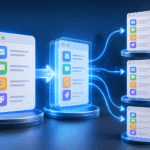
When a contact enters the New Inquiry stage — whether from a GHL form submission, Facebook Lead Ad, Google Ads lead form, or manual entry — three things must happen within 60 seconds: an SMS sends to the lead introducing your business with a specific qualifying question rather than a generic hello; an email sends with a more detailed introduction, relevant social proof, and your booking link; and an internal notification alerts the assigned salesperson with the lead’s name, phone number, source, and any qualifying data collected in the form. The research on this is unambiguous: responding within 5 minutes makes you 100 times more likely to qualify a lead than responding 30 minutes later. GHL makes this 60-second response possible for every lead at every hour of the day without any manual action required.
Proposal Sent Automation
When a deal moves to Proposal Sent, a common mistake is sending the proposal and waiting for the prospect to respond. Most never do — not because they are not interested, but because life intervenes and they forget. Configure an automatic follow-up sequence that begins the moment the deal stage changes: Day 2 email asking if they had a chance to review the proposal and whether any questions came up; Day 4 SMS with a relevant case study or client result related to their specific situation; Day 7 email addressing the three most common objections at the proposal stage; Day 10 a call task created for the salesperson; Day 14 a final email with a soft deadline framing such as we have one spot available in our next onboarding cohort and want to confirm before opening it to the waitlist. This sequence increases proposal acceptance rates by 22 to 38 percent compared to sending one proposal and waiting.
Won Triggers
When a deal is marked Won, the onboarding sequence fires automatically within minutes: a personalized welcome email outlining next steps and what the client can expect in the first 30 days; a kickoff call booking link; an internal task assigned to the delivery team to begin service provisioning; tag changes from Prospect to Active Client removing any sales-stage tags; and a 30-day calendar reminder to send a Google review request. The professionalism of this automated onboarding sequence in the 48 hours following a sale shapes the client’s confidence in their purchase decision more than almost anything that happens later in the relationship.
Custom Fields That Enable Personalized Sequences
Generic follow-up messages that do not reference anything specific about the prospect consistently underperform personalized sequences that acknowledge the lead’s actual situation. Build custom fields in GHL to capture: Current Platform or Tool Being Used, Monthly Marketing Budget Range, Primary Pain Point (from a defined list), Number of Employees, Industry Vertical, and Decision Timeline. Map these fields to your intake form or populate them during the qualification call. Email subject lines that reference the prospect’s current platform — Moving from HubSpot? Here is what our clients found — and messages that acknowledge their stated pain point outperform generic sequences by 40 to 60 percent in open and reply rates.
Conversion Rate Reporting and Bottleneck Identification
Review your pipeline conversion rates weekly. Calculate each stage transition rate: New Inquiry to Contacted, Contacted to Qualified, Qualified to Proposal, Proposal to Won. Benchmarks for service businesses: New to Contacted should be above 70 percent, Contacted to Qualified above 40 percent, Qualified to Proposal above 75 percent, and Proposal to Won between 25 and 45 percent. Any stage performing significantly below benchmark indicates either a broken automation sequence, a misaligned offer, or a lead quality problem from that particular source. Fixing the weakest conversion stage delivers more revenue than adding more leads at the top of the funnel. GHL Nexa designs and implements complete GoHighLevel pipeline systems with full automation for service businesses. Book a free consultation to get your pipeline built correctly from day one.
Pro Tips From GHL Nexa Experts
One of the most overlooked pipeline optimization techniques is the lost deal analysis. Every quarter, export all deals marked Lost in the previous 90 days and analyze the loss reason field. The top three loss reasons should directly inform your next product or service iteration. If 40 percent of lost deals cite price as the reason, your offer may need repositioning, a payment plan option, or a lower-priced entry point. If 30 percent cite timing, your nurture sequence for long-term prospects needs rebuilding.
Consider building a separate Re-Engagement pipeline for lost deals. Contacts who reach Closed Lost are tagged and added to a 90-day nurture sequence. At the 90-day mark, a GHL workflow automatically moves them back into the Active Pipeline at the New Inquiry stage for a fresh attempt. Many service businesses recover 8 to 12 percent of lost deals within 90 to 180 days through systematic re-engagement — revenue that would otherwise be permanently gone.
Use GHL’s deal notes field religiously. Every sales call, every objection raised, every concern expressed should be logged in the deal notes immediately after the conversation. When a deal is re-approached after 60 or 90 days, these notes allow the salesperson to open the conversation with specific context rather than starting from scratch — dramatically increasing re-engagement success rates.
Book a free pipeline design consultation with GHL Nexa and we will map your ideal pipeline structure, configure the stage-change automations, and have your first optimized pipeline live within 48 hours. GHL Nexa has implemented GoHighLevel systems for over 400 businesses across 40 countries. Book a free strategy call to discuss your specific setup and get a custom implementation plan.